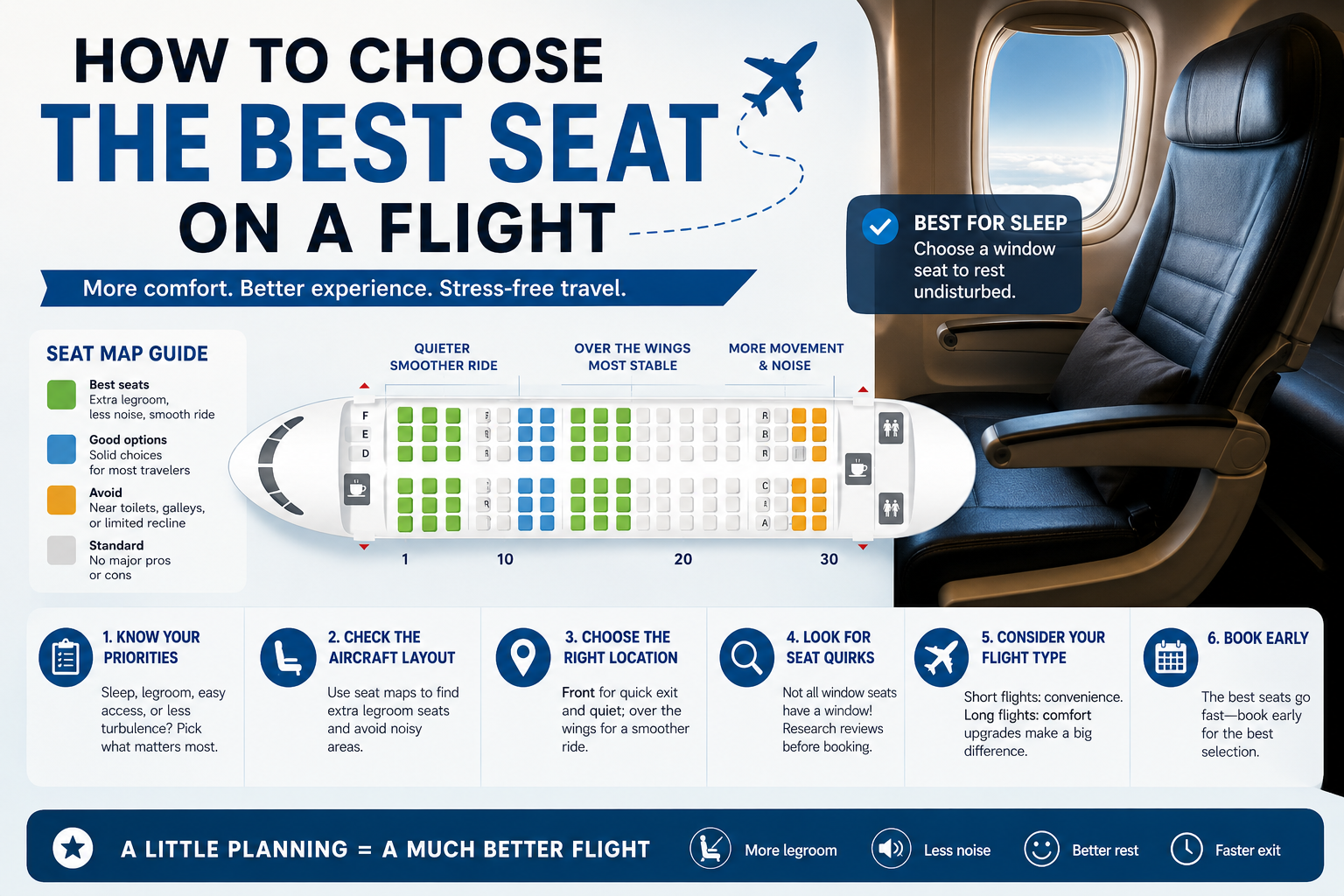
Choosing the best seat on a flight can make a surprising difference to your comfort, sleep quality, and even how quickly you exit the plane. The “best” seat isn’t the same for everyone—it depends on whether you prioritise legroom, quiet, easy access to the aisle, or a smooth ride.
1. Decide what matters most to you
Start by identifying your priority. If you want to sleep, a window seat is usually best because you can lean against the wall and won’t be disturbed by aisle traffic. If you value mobility or need frequent bathroom trips, the aisle seat is more practical. For those sensitive to turbulence, seats over the wings tend to feel the most stable.
2. Understand the aircraft layout
Not all seats are created equal, even in the same class. Some rows have extra legroom due to emergency exits, while others may have limited recline because of bulkheads or exits behind them. Tools like seat maps (often available when booking) help you avoid seats near noisy areas such as galleys or toilets.
3. Be strategic about location on the plane
Front-of-cabin seats usually mean quicker boarding and disembarkation, as well as slightly quieter conditions. The rear of the plane can be noisier and experience more movement, but sometimes offers better chances of empty adjacent seats on less busy flights.
4. Check for seat quirks before you book
A “window seat” isn’t always by a window, and some seats have misaligned windows or reduced legroom due to aircraft structure. Reviews from frequent flyers or seat-rating sites can reveal these quirks before you commit.
5. Think about your flight type
On short-haul flights, convenience matters more than comfort since you won’t be onboard long. On long-haul flights, small improvements—like extra legroom or a quieter zone—can significantly improve your experience.
6. Book early for the best choice
The earlier you book, the more options you’ll have. On popular routes, the best seats (exit rows, front cabin, or true window seats) are often taken quickly.
Ultimately, the best seat is the one that matches your priorities and avoids the drawbacks you care most about. A little planning before you fly can turn an average journey into a far more comfortable one.